Coming Soon to a Home Near You
I took a trip down memory lane to compare my house thirty years ago to what it is now and what it will become with the growth of smart technology. I found myself thinking: what consequences will these changes have on electricity consumption and the environment?
I am old enough to remember my grandmother’s home in Liskeard, Cornwall in the 1970s. She had a wood-burning oven, a pantry with a slab of marble to keep the meat cool, and a large bucket—and later—a fridge. In case you were wondering what the bucket was for, it was to wash clothes using a washing dolly. She then used a mangle to remove the water from the clothes. This physical effort to perform what is now considered a basic and automated task was probably why she lived healthily to 92.
I also remember my mom buying her first fridge and freezer in the late ‘70s and the time we first got a TV with a remote control. I no longer had to get up and change one of the three channels available for my parents!
Another thing that has changed drastically is communications. My dad worked overseas most of the time, and if we were to call him, we had to book a slot with the operator a week in advance. Now you can just take it for granted that you can communicate with anyone at any time from anywhere.
All of this was a mere thirty to forty years ago. To some of you, this might sound like a long time ago, but my grandmother’s methods hadn’t changed much from previous centuries. This means that, in the last few decades, centuries-old ways of doing things have changed beyond recognition.
Home Is Where the Tech Is
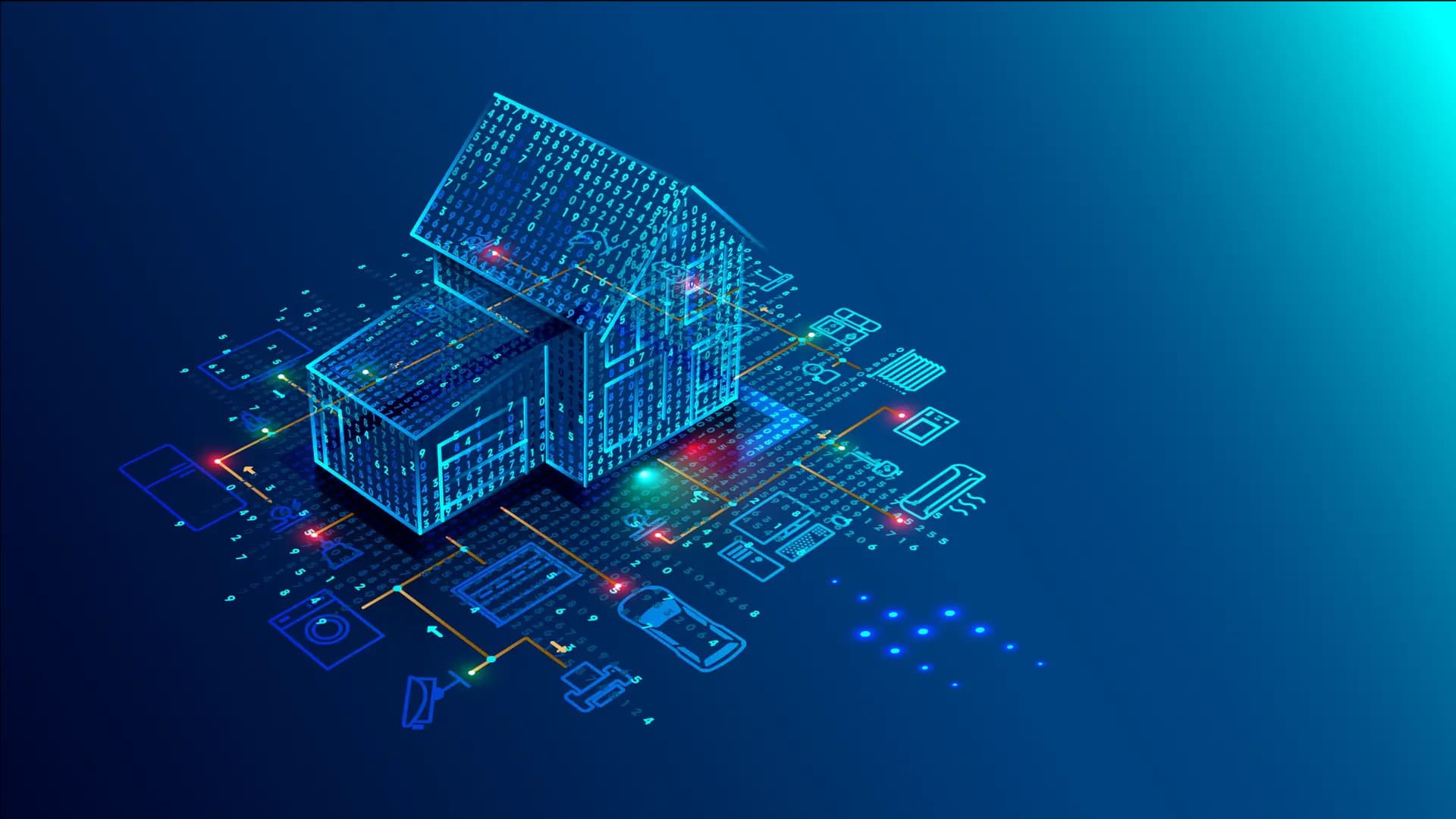
Mobile and internet technologies have boosted the rapid advance of smart technology in the home. With the advent of the Internet of Things (IoT) and smart devices, our homes are becoming increasingly connected. You can already turn on your heating, lighting, or A/C from an app. Next, the fridge will order your shopping, and your washing machine will select the best wash based on an automatic analysis of the material of your clothes.
There is more. I expect my fridge might even let me know what food is about to go bad and recommend recipes to avoid waste. It might even tell my oven to communicate with my car, bike, or smartphone so it can preheat itself when I am at the right distance from home. When I leave work, my fridge might tell me that I need more milk for the cup of tea I plan to have when I get home. My smart house and car might keep me updated on my fitness, pulse, and blood pressure, preparing a personalized fitness regime and diet appropriate for my lifestyle.
When you look at domestic appliances, they haven’t really changed much in their inner workings. However, artificial intelligence (AI) will be a game changer for how we interact with appliances. We already have video doorbells, and in the future, when someone approaches my home, an AI engine might recognize the person and tell me: “Hi Matt, your friend John is approaching the house, shall I open the door and welcome him?”
My home will also probably know when I need to leave for work based on traffic and weather conditions. It might wake me up earlier or later depending on these factors. It can then order a one-seater electric car to pick me up and take me to work. Because it woke me earlier than normal, if it’s smart, it will even improve my mood during the commute.
In terms of smart home security, your home may send an image of a person to the police based on the boundaries and alarms you set when you are away. This already happens with remote security camera viewing, but it is still manual and reactive. AI engines at police headquarters could identify threats faster, warning you or locking down your home.
All of this may sound like Star Trek, but great leaps in engineering science are being made regularly. In some cases, it is already reality.
The Costs Behind Technology
As a society, we too often take for granted how easy our lives have become and how entirely reliant we are on electricity. We have some tough questions to ask ourselves about how we live and consume natural resources. As we consume more, energy demands increase, affecting our energy bills.
Which leads to a question: with so much new technology, will our energy bill cost a fortune? And what consequences will these developments have on the environment?
There is sometimes apathy toward energy consumption and the environment, and in reality, energy is relatively cheap. If energy were expensive and we were truly concerned about our health, bills, and the environment, we would be less wasteful.
As natural resources decline, costs will rise, and smart technology will help control this by making us more efficient. There will be more pressure from consumers to adopt technologies that reduce bills and help manage costs.
Independent suppliers delivering green tariffs are encouraging. These tariffs supply energy from renewable sources, promoting investment in green technology while educating the public on its benefits.
We also need to protect our energy supply, in part by being more efficient and green in energy production. Over the next few decades, smart technology will play a key role by turning devices off as soon as we’ve finished using them.
For appliance manufacturers, the smart meter network could provide access to performance data for every machine ever made. This will give invaluable insights and enable engineers to develop more efficient and desirable products.
On the consumer side, tracking instantaneous changes in energy consumption with smart meters will allow better decision-making on energy use and cost-effectiveness.
I look forward to a time when I can take advantage of an energy supplier tariff exclusively for a single domestic appliance, like my washing machine. It will be smart enough to find the cheapest tariff based on my typical usage, saving money. The same will be possible for other appliances, like my oven.
What Next?
Things are changing very fast. Technology may be outpacing humanity, so we may need time to adjust. Meanwhile, AI and robotics will force us to ask tough questions.
There is massive growth in robotics, and it is conceivable that in the next couple of decades, we will have a smart home interacting with a domestic robot—a robot that will cook, clean, and manage your home and life. Psychologists are even asking whether we will become emotionally attached to them.
I firmly believe technology, and particularly smart technology, will give us an opportunity to reflect on society. Technology is changing us as it changes the world, and we will need to reassess our role as humans and how we interact with it.
Remember, only 30 years ago, technology began to transform centuries-old ways of doing things. It has been less than 15 years since communication dramatically changed, compared to the 25,000 years before that. We need time to adjust and start thinking smarter about how to use technology for the best.
By Matt Dillane
Business Development Manager