A Smart (Metering) Story
Since late 2013, we’ve been involved in the Smart Meter Implementation Programme (SMIP) in the UK. This unprecedented national project will see 53 million gas and electric meters installed across the country and represents a fundamental change in the way we use energy. It’s the biggest infrastructure change Britain has seen since the Second World War!
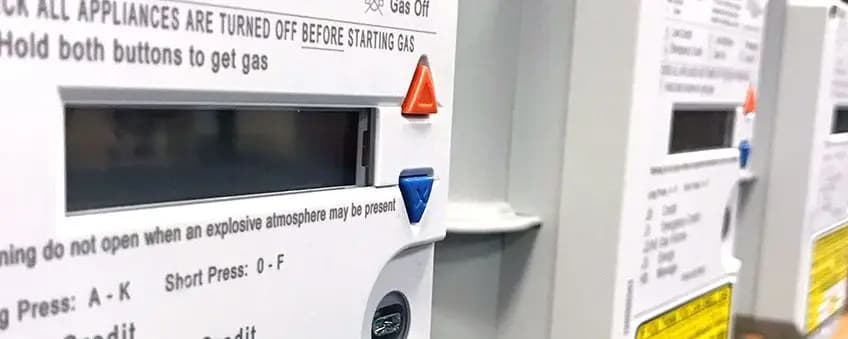
Since late 2013, we’ve been involved in the Smart Meter Implementation Programme (SMIP) in the UK.
This unprecedented national project will see 53 million gas and electric meters installed across the country and represents a fundamental change in the way we use energy. It’s the biggest infrastructure change Britain has seen since the Second World War!
Not only will the rollout of smart meters be an important part of the UK’s transition to a low-carbon economy, but it will also help the government meet some of the long-term challenges involved in ensuring an affordable, secure, and sustainable energy supply.
As a software development and validation and verification partner for one of the programme’s key players, we gained in-depth knowledge of GBCS, DLMS, Zigbee (SEP and Pro), SMETS2, SMETS1, and MMC DUIS protocols. We also developed the first industry-wide implementation of the GBCS protocol, the GFI tool, and the Parse & Correlate software for the UK programme.
This experience and knowledge placed Critical Software in a unique position: we were able to offer a solution to a tricky problem that arose during the programme.
First, some context…
Many early smart meters were implemented using SMETS1, an initial set of technical standards created by the government for smart meter equipment to conform to. However, in order to make SMETS1 smart meters usable, energy suppliers had to put in place their own data and communications infrastructure arrangements.
When the national network went live, millions of older smart meters were already operating outside of the new infrastructure. With so many non-connecting devices literally speaking a different language, the whole programme was at risk.
Not only might customers with older meters find themselves with ‘dumb’ devices, rendering the consumer benefits mostly invalid, it would also be harder for them to switch suppliers.
Operations were in danger of becoming less efficient and less effective, and millions of SMETS1 smart meters would likely need to be replaced before the end of their operational lifespan, which would result in significant costs.
The industry needed to determine how to guarantee older smart meters would work correctly with the new network. It sounds simple, but the complexity of this problem left many people somewhat stumped.
When this problem arose, CRITICAL applied our experience to develop a new testing solution—one that solved the riddle and provided a usable answer.
After extensive design and testing, we built a new tool—the Smart Meter Integrated Test Environment solution, or SMITEn. This tool was designed to give meter manufacturers, energy suppliers, meter leasing companies, and test houses/facilities the assurance that their devices will work before they are connected to the national network.
In technical terms, SMITEn has the ability to run end-to-end testing of smart meters while managing interactions among multiple systems and components, both real and emulated. It was quite a breakthrough!
So, what is this powerful tool made up of? Let’s take a closer look. While developing SMITEn, we focused on three key features: simplicity, modularity, and automation.
Simplicity
SMITEn has a simple infrastructure setup and is easy to deploy, maintain, and update. Using the tool is also straightforward.
By employing a flexible testing approach, test results are easily readable, even by non-programmers. There is considerably less coding and maintenance effort required as well. After executing a test, SMITEn provides a report with the outcome—pass or fail. The report contains valuable information, and SMITEn also provides logs for in-depth analysis.
Modularity
The tried-and-tested base architecture for system validation that we designed some time ago forms the core basis for SMITEn. It separates concerns around the System Under Test (SUT), namely the environment, instrumentation, protocol, and control areas.
By being modular, SMITEn separates and abstracts the implementation and execution of each component. In simple terms, this means switching equivalent components is easy and transparent. Replacing SMITEn's instruments allows the same test to use a real device instead of an emulated one.
Automation
SMITEn uses a keyword-driven framework for test script coding and automation. This framework is easy to use but powerful enough to serve as an acceptance-level test automation framework. It is flexible and can be extended through external modules.
This means tests can be easily automated. It is possible to integrate test script execution into a continuous integration system, allowing for faster tests, reproducible results, and fewer errors compared to manual execution.
It was important for us to make SMITEn a viable option for a range of different users. There are many types of organizations that may find the SMITEn solution attractive, including test houses/facilities, meter manufacturers, and energy providers. These organizations vary in size, operate within different budgets, and have different needs. That’s why the tool is available in two variants: as a product (software license) and as a service.
For example, a test house or a large manufacturer with a dedicated test laboratory—where many meters are tested—might prefer a short issue-to-resolution turnaround. They want to quickly replicate issues in their own laboratories and verify fixes. In this case, the best solution is a SMITEn software license with extended support for installation, configuration, and integration with their broader laboratory software.
In other cases, energy suppliers may require independent testing, or a meter manufacturer might have specific testing requirements. In these scenarios, we offer a full-service solution—Smart Meter Testing as a Service (SMTaaS). Customers can send their devices to our lab, where we use SMITEn to perform tests using predefined or customized test plans, depending on their needs.
Although we use SMITEn for testing smart metering-related components, the tool can be applied in other contexts and areas. In theory, if it is possible to code the behavior and interaction of a component (hardware or software), then it can be integrated as an instrument into SMITEn and used for testing. The possibilities are exciting.
It is also exciting to know that now the national network is live, our software will continue to provide a secure communications infrastructure between smart meters and energy suppliers.
We are pleased to have had the opportunity to be involved with the SMIP and to apply our expertise to develop tools that support this impressive programme.
Because the SMIP is in place, the benefits will be realized by businesses, consumers, and the planet. Ultimately, along with easier switching, people will be able to see how they use energy and how much it costs—putting them in control and allowing them to make better, more informed choices. Learn more about SMITEn with our free white paper.