Next Stop: Railway Interlocking Systems
Interlocking systems play an important role in keeping railways safe. Learn how Critical Software ensures trains reach their destinations safely, from developing high-quality software to providing comprehensive system certification.
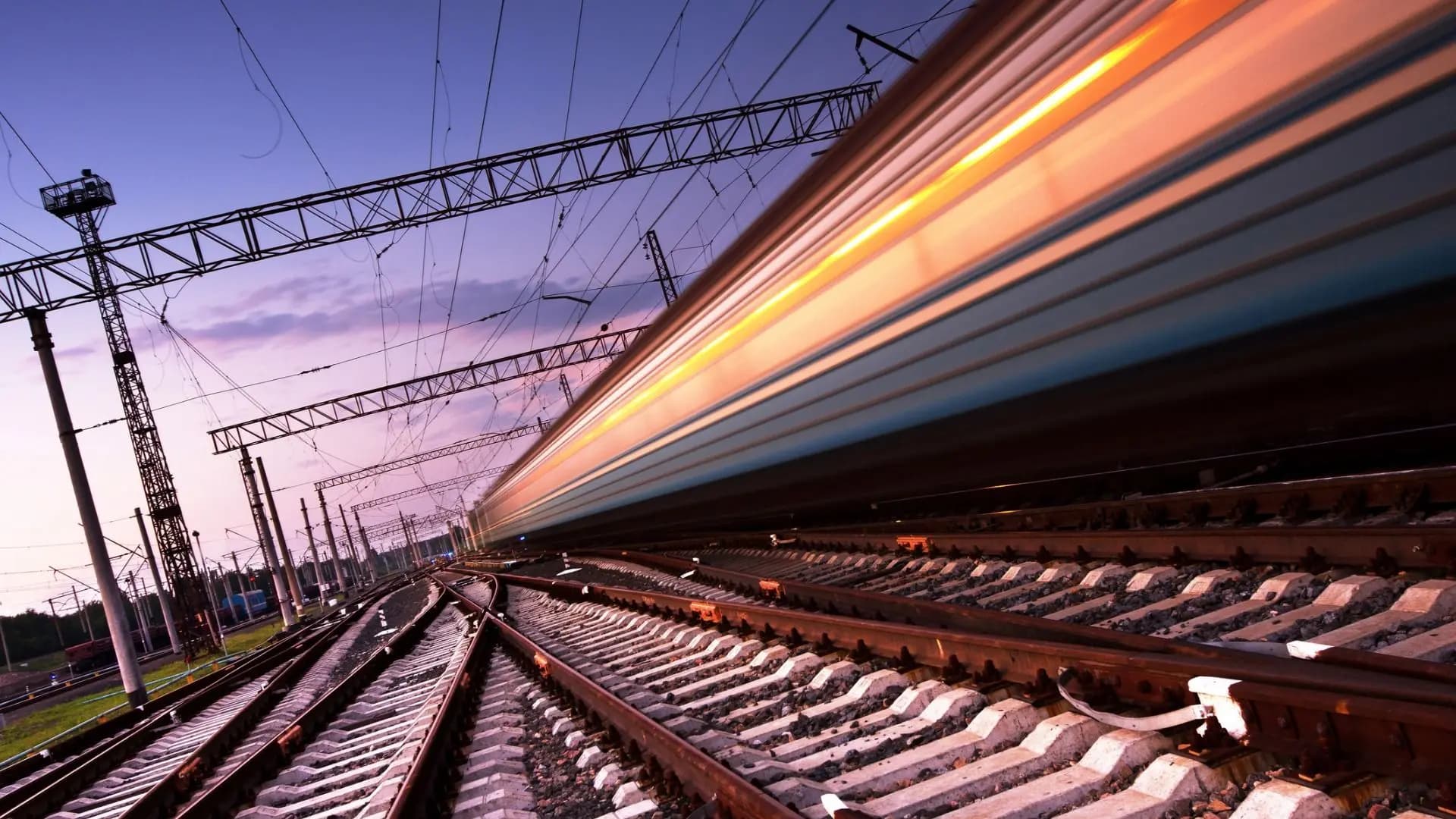
You’re sitting comfortably on the train, probably looking out the window admiring the landscape or just reading a good book. What usually doesn’t cross your mind is the complex network of people and systems that make your journey possible. Join us as we discover what happens behind the scenes.
One of the most crucial components of train travel is the interlocking system. Simply put, its main job is to ensure safe train operations by preventing route conflicts while controlling external objects such as signals and track switches. These systems respond within milliseconds!
The most commonly used system today is the Computer-Based Interlocking (CBI) system, which offers very high capacity, uses compact equipment, is flexible, and delivers excellent performance. Because every railway system has its own requirements, interlocking systems must be highly adaptable. For this reason, they use a modular architecture—centralized or distributed—that allows them to interact with all kinds of equipment depending on the specific network’s needs.
With such a safety-critical role, these systems must meet strict international standards to guarantee the highest levels of safety, reliability, and availability. Both hardware and software undergo rigorous verification and validation processes, conducted by independent test teams, where all possible hazard situations must be identified. Qualitative and/or quantitative methods (usually a combination of both) are used. Questions such as "what must go wrong for a system hazard to occur?" are examined qualitatively, while quantitative methods provide estimates of probabilities, rates, and/or severity of operational consequences.
Many elements are mandatory for assessing these critical systems, including the preparation of safety cases, technical safety reports, safety management (including safety plans, hazard logs, and safety requirements specifications), evidence of quality management throughout the system’s lifecycle, and proof of functional and technical safety.
Critical Software participates in multiple certification programs for several Computer-Based Interlocking systems. Trains in countries such as Germany, France, Austria, Italy, and Israel rely on software developed by our engineers, who work behind the scenes to design and implement these systems, ensuring everyone arrives safely at their destinations!