The Challenge of Interoperable Services
New rail locomotives need not only to be more efficient and environmentally friendly, but also more reliable with greater interoperability. That means facing significant challenges.
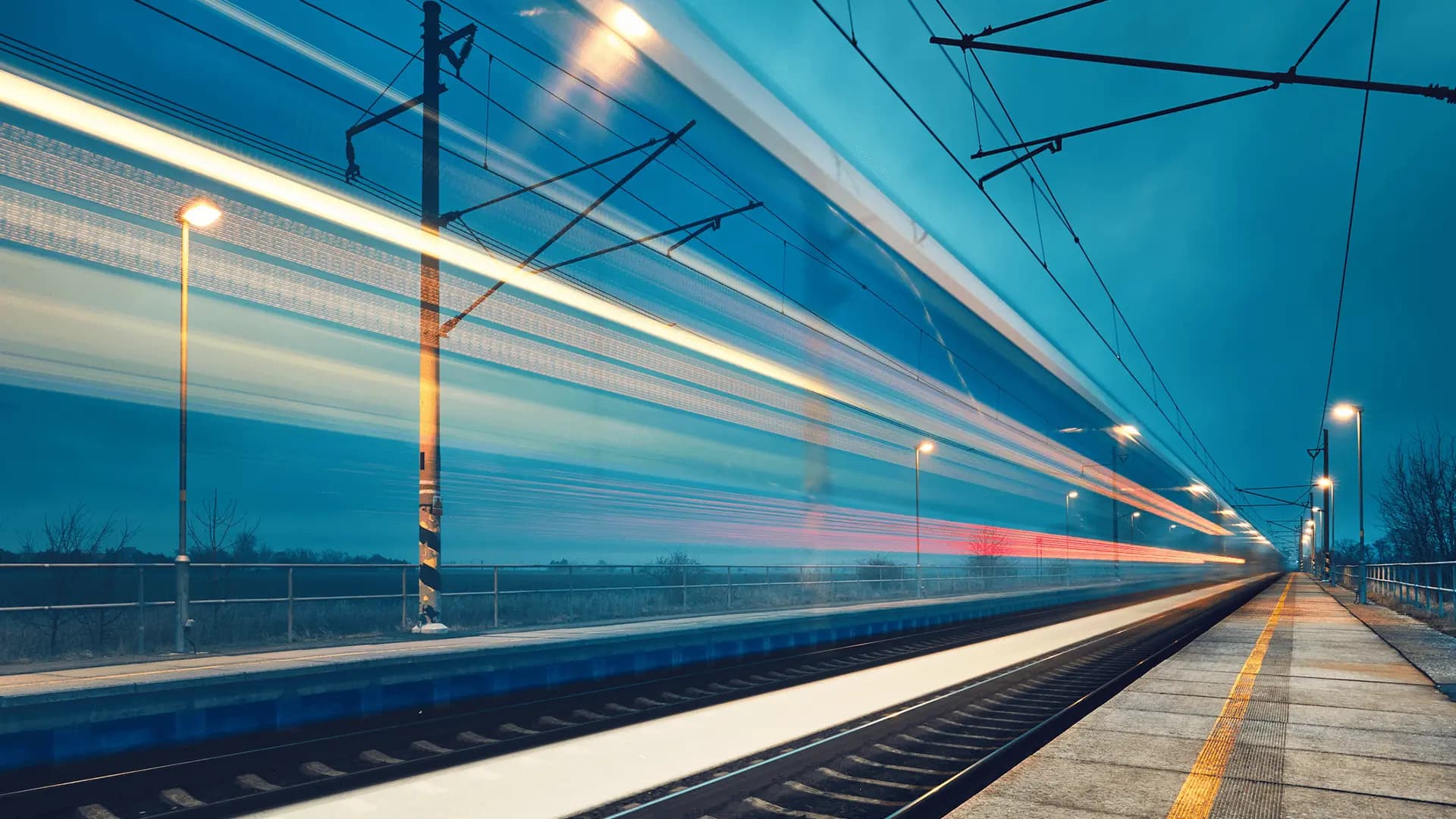
The liberalization of rail transportation in Europe, which began in the 1990s, has changed the railway market. The flow of goods is moving faster over increasingly long distances. Most freight traffic in Europe is now cross-border, so in order to remain competitive, locomotive manufacturers must overcome a major issue: interoperable services.
This means that new rail locomotives need to be more efficient and greener while also being more reliable and interoperable. The interoperability between trains and the various infrastructures presents several challenges:
Political and Economic Challenges
The European Rail Traffic Management System (ERTMS) enhances cross-border interoperability by creating a single Europe-wide standard for train control and command systems. However, even with the European Union aiming to harmonize operations, national entities are not always willing to enforce the necessary interoperability for many reasons—for example, the prohibitive costs of upgrading their infrastructure to achieve only the same level of safety.
Safety and Certification
Cross-border interoperability requirements add pressure on locomotive manufacturers, who must meet an increasing number of statutory requirements as well as new standards and directives created by the European Union. Additionally, the growing use of software, high levels of system integration, and new connectivity requirements all present significant challenges in meeting safety and certification standards.
Technical Challenges
Cross-border operations mean that manufacturers must support different catenary voltages (15 kV AC, 25 kV AC, 3 kV DC, and 1.5 kV DC), different types of pantographs, various train radio systems, and different loading gauges, to name just a few of the many diverse national requirements.
One of the most difficult challenges in achieving interoperability is the automatic train protection (ATP) systems. These safety systems have a high safety integrity level and are responsible for the protection of people and goods. One of the main challenges in implementing support for these systems is the diversity and number of systems required for cross-border operations.
Since each country usually adopts a unique ATP system, locomotives and other rolling stock must integrate multiple train protection technologies and antennas, allowing them to operate across borders. For example, during operations in the DACHINL region alone, a locomotive must be equipped with more than twenty different antennas.
Meeting all the demands of interoperable services is not easy, especially for locomotive manufacturers. However, if proper methods are applied during the development lifecycle and the safety integrity level is maintained, costs and time to market of the final product can be reduced.