The Rise and Future of Automatic Train Operation
Automatic train operation (ATO) is more than just automated trains—it encompasses a variety of operating states that keep trains traveling at the correct speed and stopping at precise locations. But how far could automatic train control eventually stretch along the tracks?
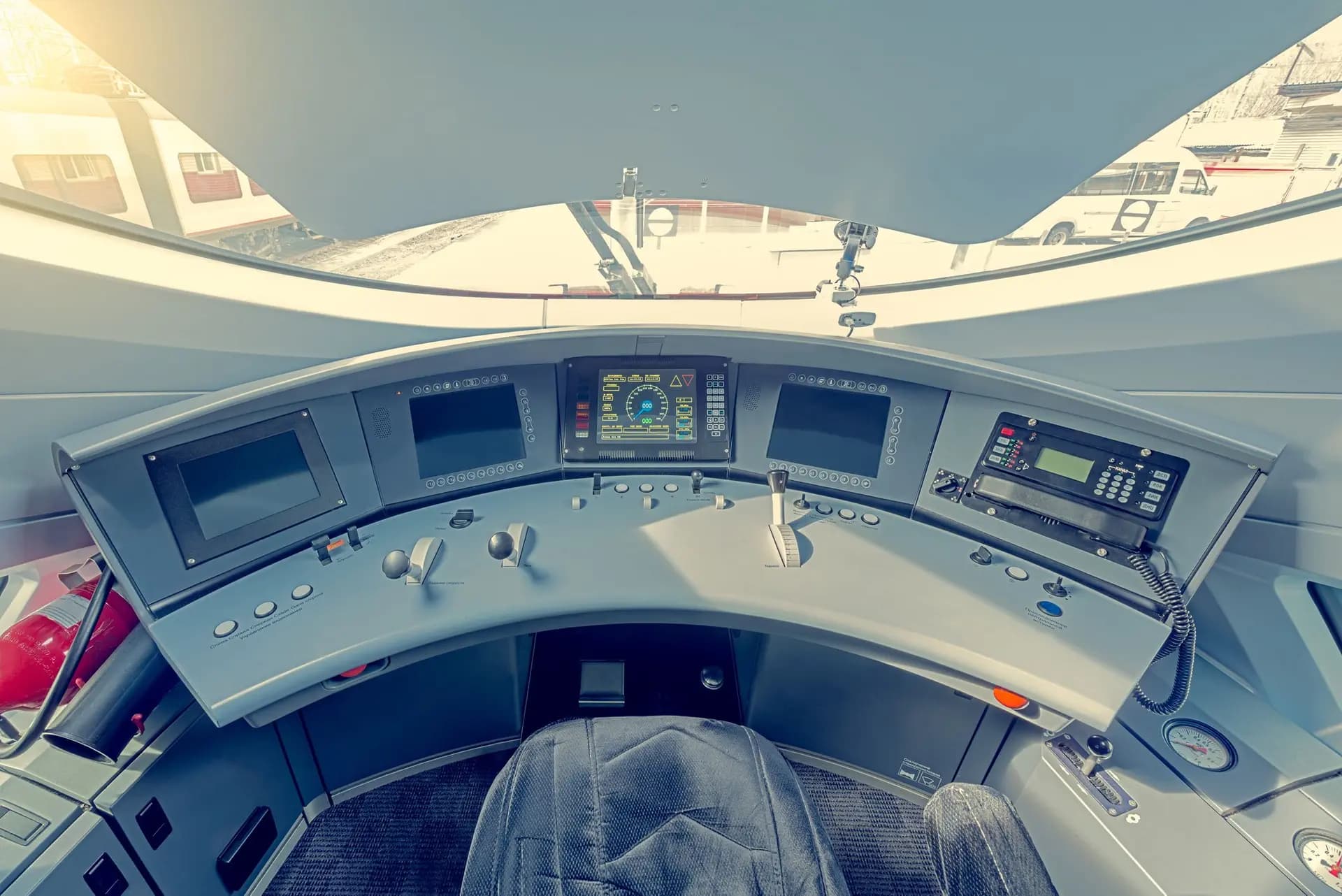
ATO doesn’t necessarily mean a train operates without a driver. Let’s explore how ATO has transformed railways and its revolutionary potential for the future.
What is ATO Anyway?
Automatic Train Operation is a non-critical system that ensures trains stop exactly at stations or stop signals, controls acceleration and braking to avoid sudden changes, and enables automation of train doors. In practice, ATO is implemented in several ways:
Semi-Automatic Train Operation (STO): Executes train movements between stations using a pre-set speed profile and signaling systems to control acceleration, braking, and stopping positions.
Driverless Train Operation (DTO): Adds automated door control to STO, removing the driver while retaining a train guard for passenger service and safety.
Unattended Train Operation (UTO): Removes both driver and guard roles, ensuring passenger safety through features such as platform screen doors.
Getting On Board with ATO
ATO is now common on inner-city and suburban metro lines, such as the London Underground’s Victoria line. Mainline adoption is more complex. In the UK, Thameslink—operating in southeast England—is the first mainline operator using ATO. Govia claims this will increase train frequency to 24 trains per hour in central London and boost capacity by up to 70%.
Other trials, like those by Nederland Spoorwegen, aim to increase capacity on busy Dutch networks. ATO promises to transform railway operations, but it comes with challenges.
Mainline Concerns
Mixed-traffic lines, used by both passenger and freight trains, limit potential frequency gains. While Thameslink currently sees minimal freight traffic, full network adoption could reduce expected benefits.
Human impact is another consideration. Automation may reduce the need for drivers and guards. In Britain, discussions around driver-only operation (DOO) on routes like South Western Railway and Northern have already prompted strike action over potential job losses.
Financial investment is also significant. Most mainline rolling stock lacks ATO-supporting onboard systems, such as Automatic Train Protection (ATP), and wayside equipment is often outdated. Upgrading the entire infrastructure to support ATO requires substantial time and budget, which may not always be available.
The End of the Line?
ATO has revolutionized high-density metro systems. Its success on mainlines depends on several factors, including mixed-traffic effectiveness, workforce impacts, and infrastructure investment. One certainty remains: the technology exists. How rail companies choose to implement it is the challenge.